
Preventable Parasitic, Bacterial, Viral and Fungal Infections
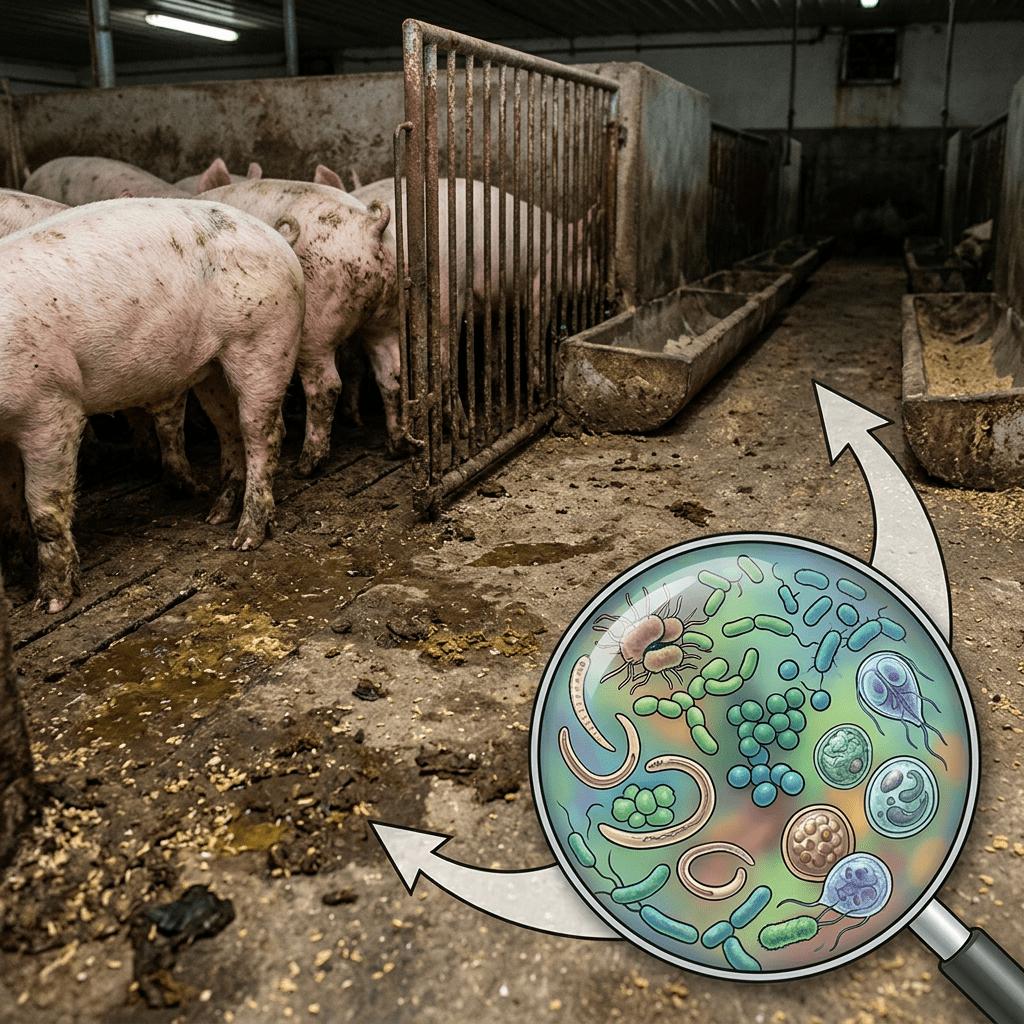
For thousands of years, human beings have domesticated animals, consumed their bodies and secretions, worn their skins, and spread their manure on fields. These practices have exposed humanity to countless bacteria, viruses, fungi and parasites, besides being a direct form of abuse or exploitation of sentient beings. Modern industrial farming has intensified these risks through crowded confinement, routine antibiotic use, slaughterhouses, global transport of animals, and enormous quantities of manure contaminating soil and water.
While no lifestyle eliminates all infections, a whole-food plant based vegan lifestyle combined with good hygiene, safe food handling and healthy living substantially reduces exposure to many of these pathogens in a very significant way as illustrated below.
Some Viruses Associated with Animal Products
| Virus | Common Source | How Veganism Reduces Risk |
| Avian influenza | Poultry farming | Eliminates direct exposure to poultry and poultry products |
| Swine influenza | Pig farming | Eliminates direct exposure to pigs and pork |
| Hepatitis E | Undercooked pork, wild boar, deer | Eliminates these food sources |
| Norovirus infection | Undercooked oysters, mussels and other filter-feeding shellfish contaminated by sewage | Eliminates this food source |
| Hepatitis A | Raw shellfish from contaminated waters | Eliminates this food source |
Coronavirus outbreak was also linked with animal exploitation, believed to have links to live animal markets or wet markets, eating bats, or pangolins, and with racoon dogs, being traded or used. More in previous article, 4 part series: Veganism, Coronavirus and Other Human Diseases
Bacteria
| Infection | Common source | How Veganism Reduces Risk |
| Salmonellosis | Poultry, eggs, meat, dairy, manure | Eliminates direct consumption of major sources |
| Campylobacteriosis | Chicken, raw milk | Avoids principal food source |
| Escherichia coli | Beef, manure contamination | Removes beef exposure and reduces manure contact |
| Listeriosis | Soft cheeses, deli meats | Avoids many high-risk foods |
| Brucellosis | Dairy, livestock | Avoids infected animal products |
| Tuberculosis | Cattle, raw milk | Eliminates dairy-related transmission |
| Leptospirosis | Animal urine contaminating water | Reduced exposure through avoiding livestock |
| Anthrax | Livestock and animal hides | Avoids occupational exposure |
| Q fever | Sheep, goats, cattle | Avoids farm-related exposure |
Parasites
| Infection | Common source | How Veganism Reduces Risk | |||
| Taeniasis (intenstinal) | Beef Tapeworm (Taenia saginata) | Eliminates | |||
| Neurocysticercosis (can cause epilepsy) | Pig Tapeworm (Taenia solium) | Eliminates | |||
| Diphyllobothriasis (linked to Vit B12 deficiency anaemia) | Fish Tapeworm (Diphyllobothrium latum) | Eliminates | |||
| Anisakiasis | Nematode worms from undercooked Sea Animals | Eliminates | |||
| Trichinellosis (can cause brain, lung and heart inflammation/ death) | Roundworm from Pigs, wild animals | Eliminates | |||
| Toxoplasmosis | Single celled protozoa from undercooked animal body, Cat faeces | Greatly reduces (gardening hygiene still needed) | |||
| Cryptosporidiosis | Single celled protozoa from manure and fecal contaminated water | Reduces exposure | |||
| Giardiasis | Single celled protozoa from faeces contamination | Hygiene still essential | |||
- Pig tapeworm (Taenia solium) can cause intestinal infection and, more seriously, Neurocysticercosis when larvae invade the brain, a leading preventable cause of epilepsy.
- Beef tapeworm (Taenia saginata) is acquired by eating undercooked beef and can grow upto 1 metres long in human intestine.
- Fish tapeworm can grow upto 15 metres long in the human intestine.
- These can live inside humans for upto 30 years untreated
- Roundworms such as Trichinella are acquired by eating infected pork or wild game.
- Dairy and chicken can also transmit harmful protozoa, bacteria, and parasitic worms to humans. The most common culprits are Toxoplasma gondii, Cryptosporidium, and Campylobacter.
Fungal Diseases Associated with Animal Exposure
Although fungi are widespread in nature, close contact with animals can increase certain infections.
- Ringworm – cattle, cats, dogs and farm animals.
- Histoplasmosis – bird and bat droppings.
- Cryptococcosis – pigeon droppings.
Diseases Spread Through Animal Manure
Animal manure can contain:
- Salmonella
- Campylobacter
- E. coli
- Listeria
- Cryptosporidium
- Giardia
- Antibiotic-resistant bacteria
These organisms may contaminate vegetables and water-bodies.
Using Veganic compost (plant based organic feed) reduces such risks.
Prione: Variant Creutzfeldt–Jakob disease
Mad cow disease, scientifically known as Bovine Spongiform Encephalopathy (BSE), is a universally fatal neurological disorder. Prions are certain versions of proteins that destroy nervous tissue in the brain and spinal cord. Animals typically become infected by eating contaminated feed containing dead bodies and bones from infected animals often added to supplement their diet. People can develop a fatal human variant of the disease, known as Variant Creutzfeldt-Jakob Disease (vCJD), by consuming beef products contaminated with infected body parts.
Antibiotic Resistance
Over half of the world’s antibiotics are used in farmed animals in many countries, creating strong evolutionary pressure for antibiotic-resistant bacteria. Resistant strains such as certain forms of Methicillin-resistant Staphylococcus aureus and resistant Salmonella have been associated with animal exploitation.
How to Reduce Your Risk
A healthy vegan lifestyle helps reduce exposure by avoiding many major transmission routes.
1) Eat a Whole-Food and Raw Vegan Diet
Choose foods such as:
- vegetables
- fruits
- legumes/ sprouts
- beans
- peas
- nuts
- seeds
- herbs
- spices
These foods are naturally free from animal pathogens found in meat, dairy, eggs and seafood before contamination from handling.
2) Practise Good Hygiene
- Wash hands regularly.
- Wash fresh produce thoroughly.
- Drink clean water.
- Avoid cross-contamination during food preparation.
- Store foods safely.
- Keep environment and all items clean and pest-free.
- Compost plants appropriately and avoid animal manure in home gardening.
- Avoid unnecessary contact with non-human animals, faeces, or contaminated mud.
- Limit close contact with unhygienic and infected humans or their objects.
3) Support a Healthy Immune System
A varied plant-based diet provides nutrients important for immune function, including:
- Vitamin C
- Vitamin A (from carotenoid-rich plants)
- Vitamin E
- Zinc
- Selenium
- Folate
Ensure a reliable source of Vitamin B12 through fortified foods or supplements, and maintain adequate Vitamin D from sunlight or supplementation where appropriate.
4) Use Herbs and Spices with Antimicrobial Activity
Many culinary herbs contain natural compounds that have demonstrated antimicrobial effects in laboratory studies and can be part of a healthy diet, although they should not be viewed as treatments for infections.
Examples include:
- Garlic
- Ginger
- Turmeric
- Oregano
- Thyme
- Cinnamon
- Cloves
- Rosemary
- Sage
- Holy basil
- Peppermint
Prevention Is Better Than Treatment
While no diet or lifestyle can guarantee complete protection from infectious diseases (because one can still acquire infections from contaminated water, poor hygiene, wildlife, insects, or other humans), being Vegan is still essential. A whole-food vegan lifestyle, combined with good hygiene, safe food handling, clean water, regular physical activity, adequate sleep, and evidence-based healthcare, offers one of the most effective ways to lower the risk of many preventable infectious diseases. It also significantly prevents other major diseases such as cancers, diabetes and cardio-vascular ailments, while respecting the lives and rights of non-human animals at the same time, and helping the planet too.


